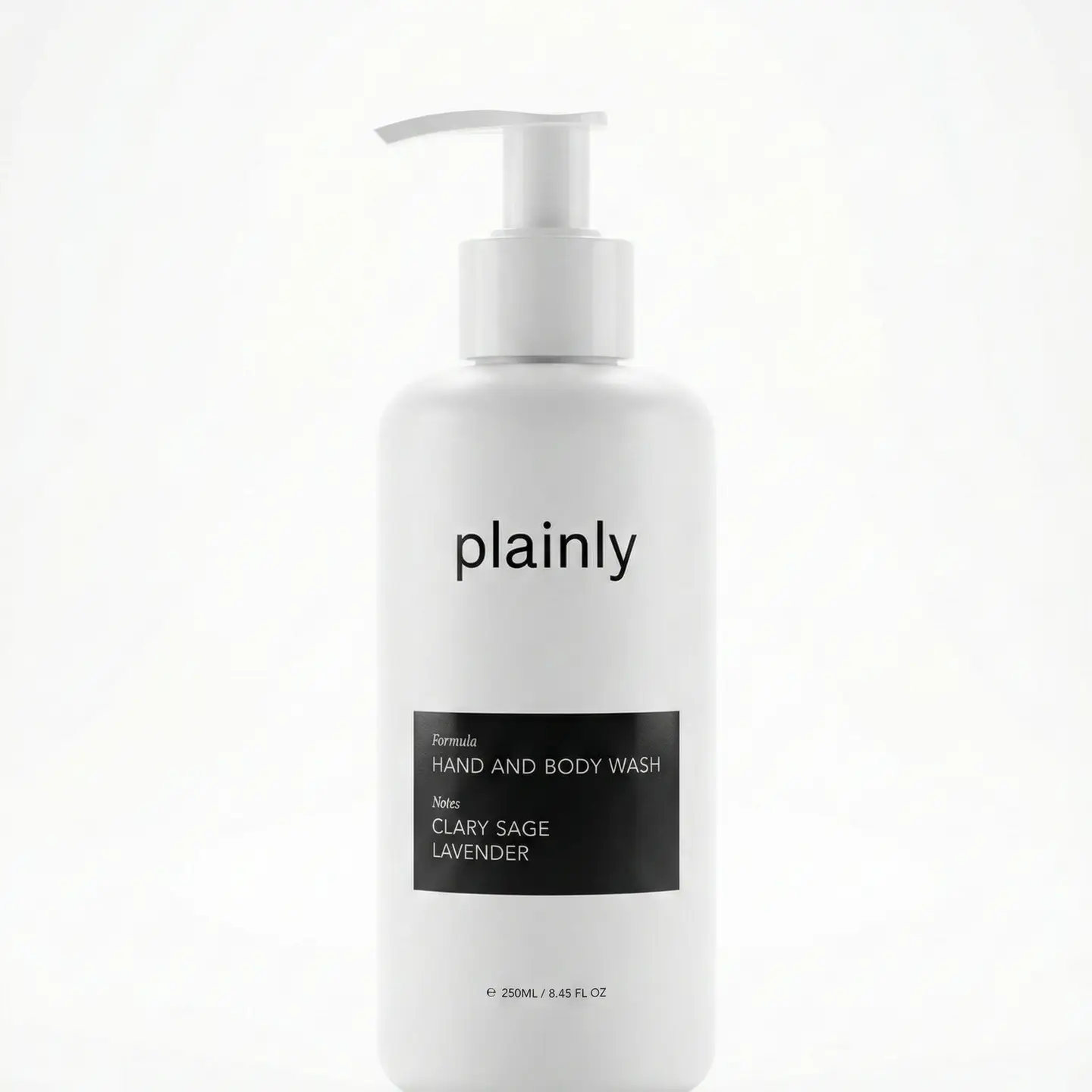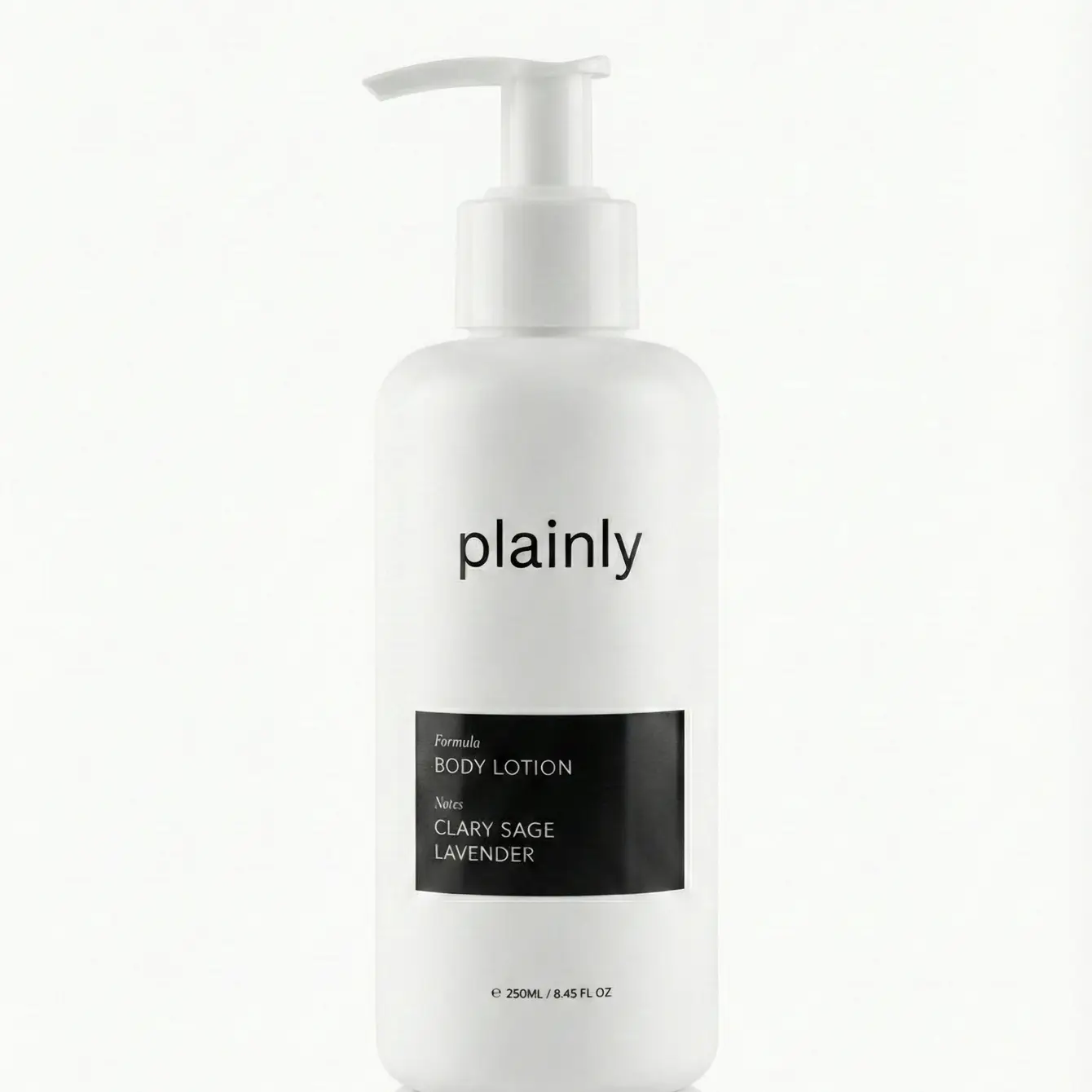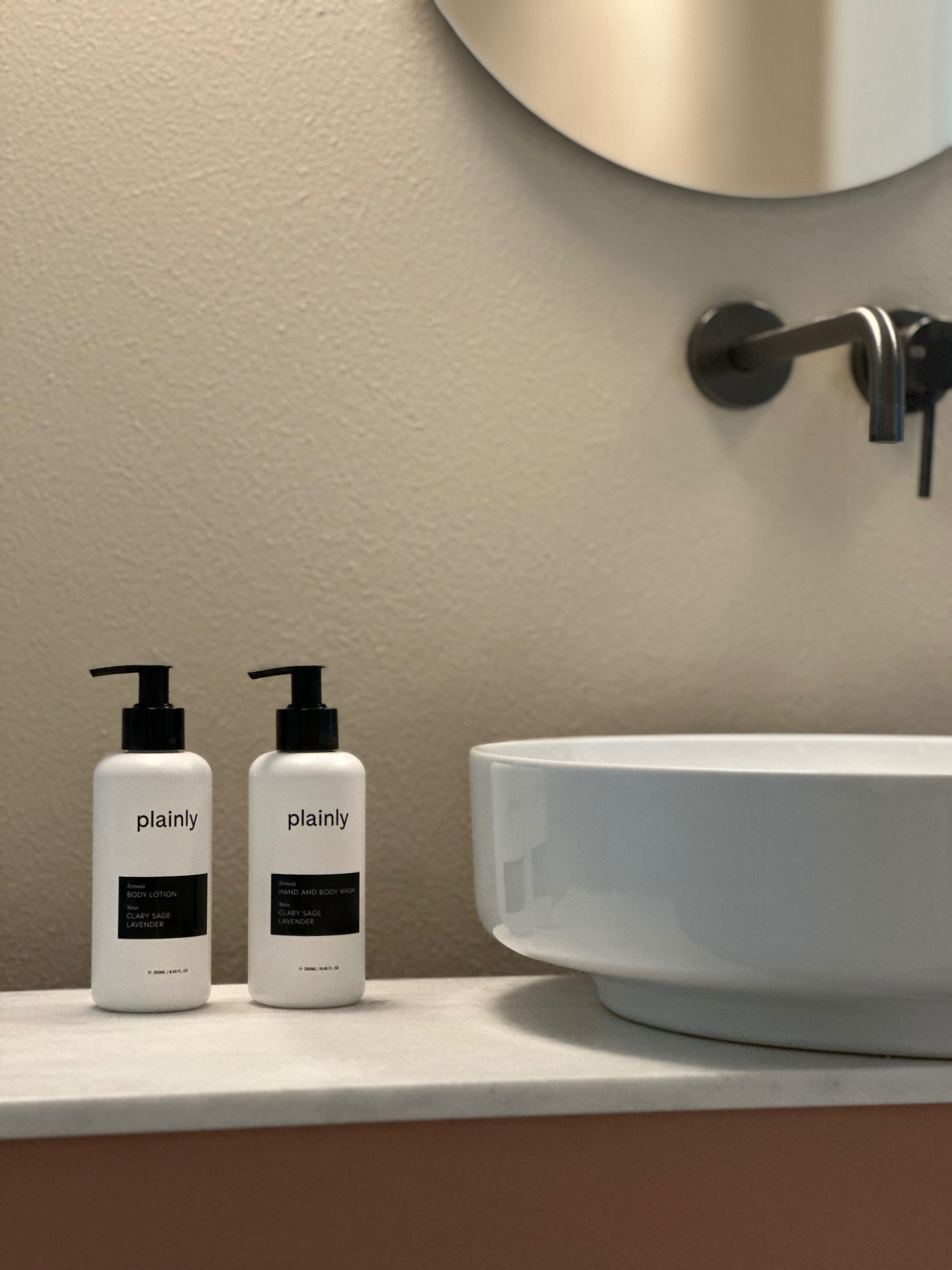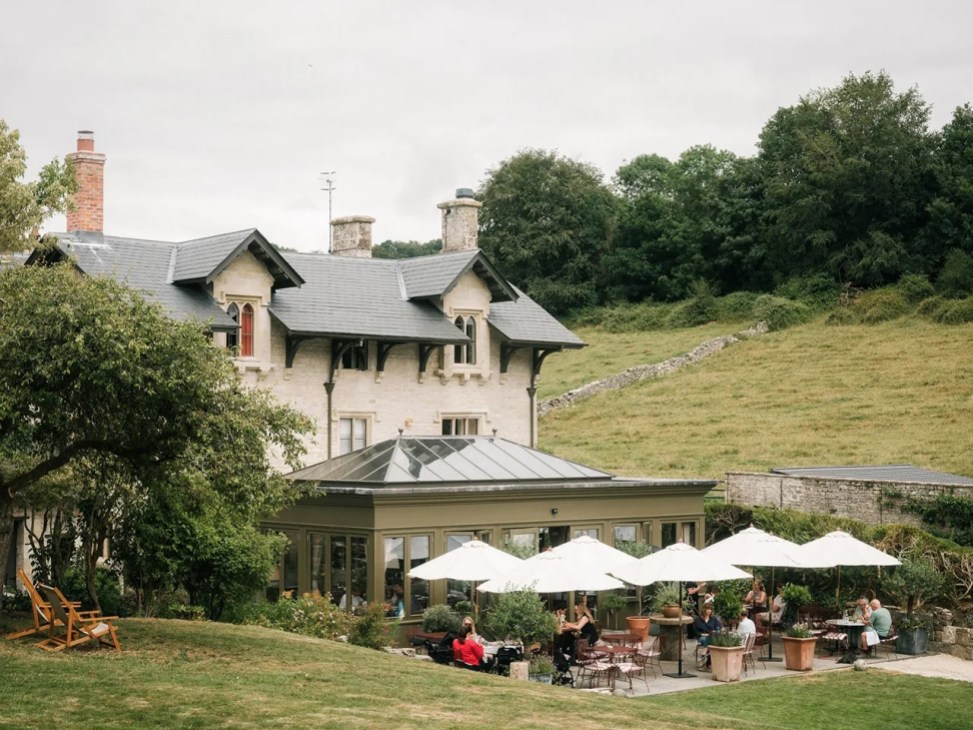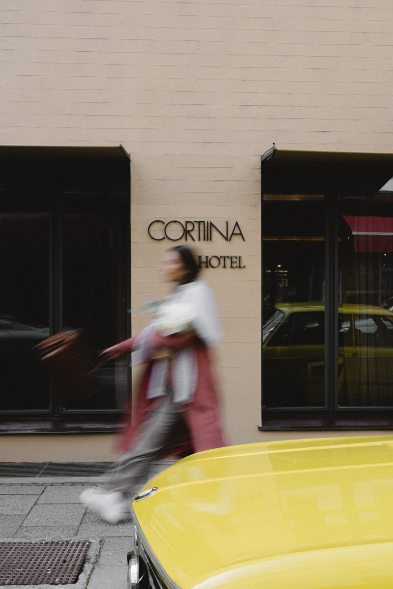
Cortiina sits a short walk from the Frauenkirche, behind a façade so quiet you could mistake it for a private residence. Inside, oak, stone and brushed brass repeat in patient detail — and on every washbasin you find the same sand-blasted glass bottles we make in Munich. We sat down with the Cortiina team to talk about how a design hotel decides what its guests touch.
On choosing materials over moments
Cortiina is a Design Hotels member with a very specific material language. How do you decide what belongs in a guest bathroom?
We try not to chase trends. The things in a bathroom are the things a guest touches first in the morning and last at night — the bottle, the soap, the towel. If those three things feel right, the rest of the room follows. We choose by hand and by weight before we choose by name.
Why Plainly?
It looked like our building. That sounds glib but it's true — the bottle has the same restraint as our oak panelling. And it's made fifteen minutes from us. Guests notice the scent before they notice the brand, which is the order we want.
“If the bottle, the soap and the towel feel right, the rest of the room follows.”
On the small architecture of a stay
It is easy to talk about hospitality in terms of dramatic gestures — the lobby, the view, the bar. Cortiina builds it instead from a thousand small touchpoints, of which the bathroom amenity is one. The brief we were given was unusually clear: nothing branded loudly, nothing perfumed cheaply, nothing that asks the guest for attention.
What does a hotel amenity have to do that a retail product doesn't?
It has to be invisible until it's used, and excellent the moment it is. A guest doesn't read the back of a bottle on holiday. They feel the glass, they smell the scent, they decide in two seconds whether the room is serious about them. Plainly does that work for us quietly.
On Munich
Both Cortiina and Plainly are unmistakably from this city — restrained, slightly serious, slightly warm. There is a Munich way of doing hospitality that prefers craft to spectacle, and we suspect that is why this partnership feels less like a supplier relationship and more like working with a neighbour.
“Guests notice the scent before they notice the brand. That is the order we want.”