Andrew Tuck, Monocle's editorial director, has written about the plate flip: the guest who turns over a dish to read its maker, checks where the wine comes from, glances at the towel label. Hotels talk a great deal about a sense of place; the plate flippers are the ones who verify it. Our argument is simple — the inspection does not stop at the table. It continues in the bathroom, at the one object in the room that is picked up, read and used every morning.
Two hotels, one logic
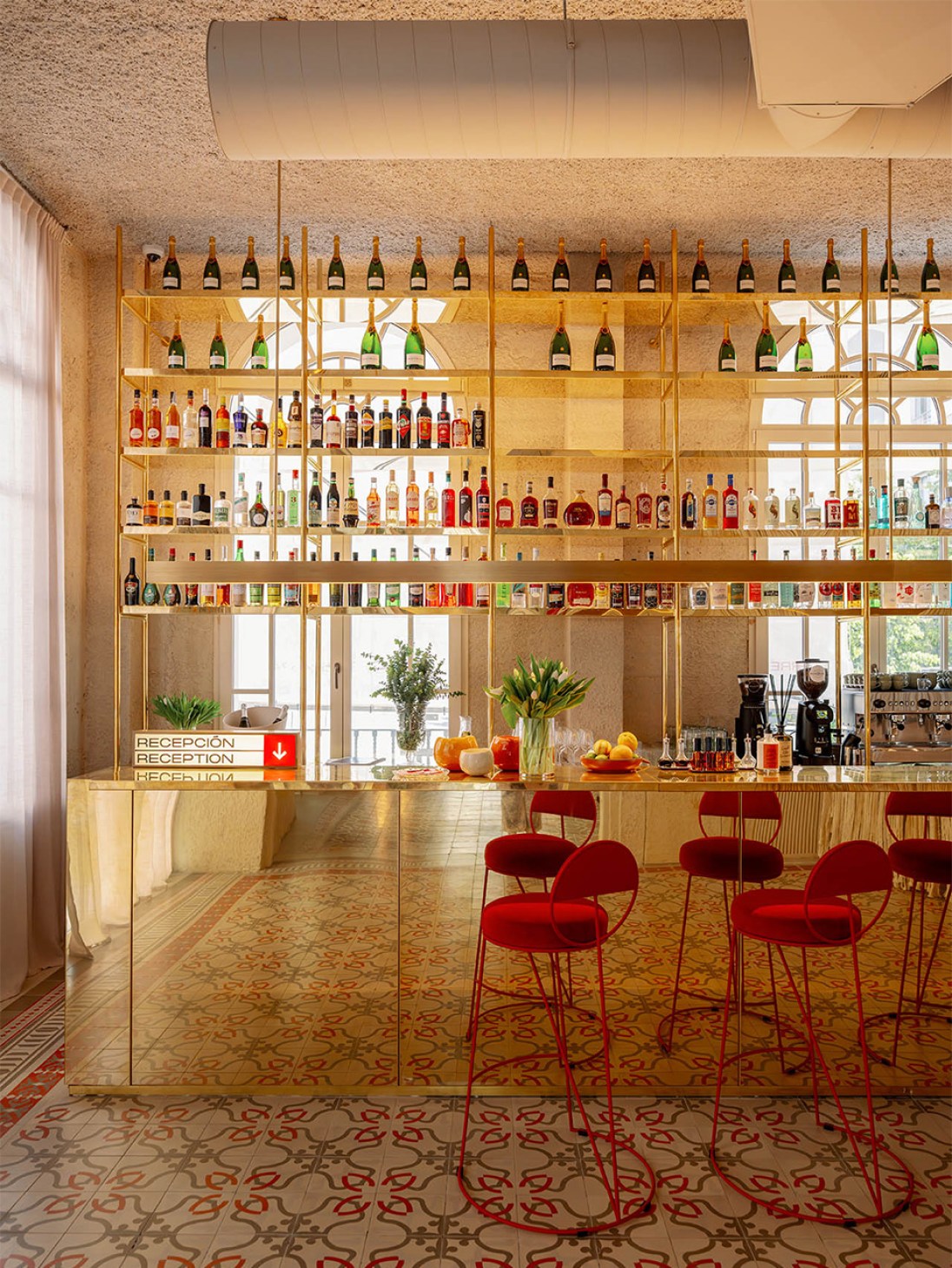
Two recent Monocle features from Mallorca make the case better than we could. The first is the Terreno Barrio Hotel in Palma, where Lydia Piñero took on a 1935 apartment block by local architect Francesc Casas and asked Palma studio Ohlab — Jaime Oliver and Paloma Hernaiz — to build a 41-room hotel that belongs to its neighbourhood. Rubble from the demolished building next door was turned into terrazzo, now found through the bathrooms and communal areas. Unwanted Mallorcan sheep's wool became a heavy curtain veiling the restaurant. Brass counters, minibars, mirrors and lighting were made with local firms including 2monos and Contain; murals and hand-painted room motifs were commissioned from artists on the island; the shelf above the minibar holds Valldemossa olives, Mel Vici honey and Cabraboc gin.
“We never use external consultants. We prefer to make it ourselves, working with local lighting designers because we think that it's one of the most important elements.”
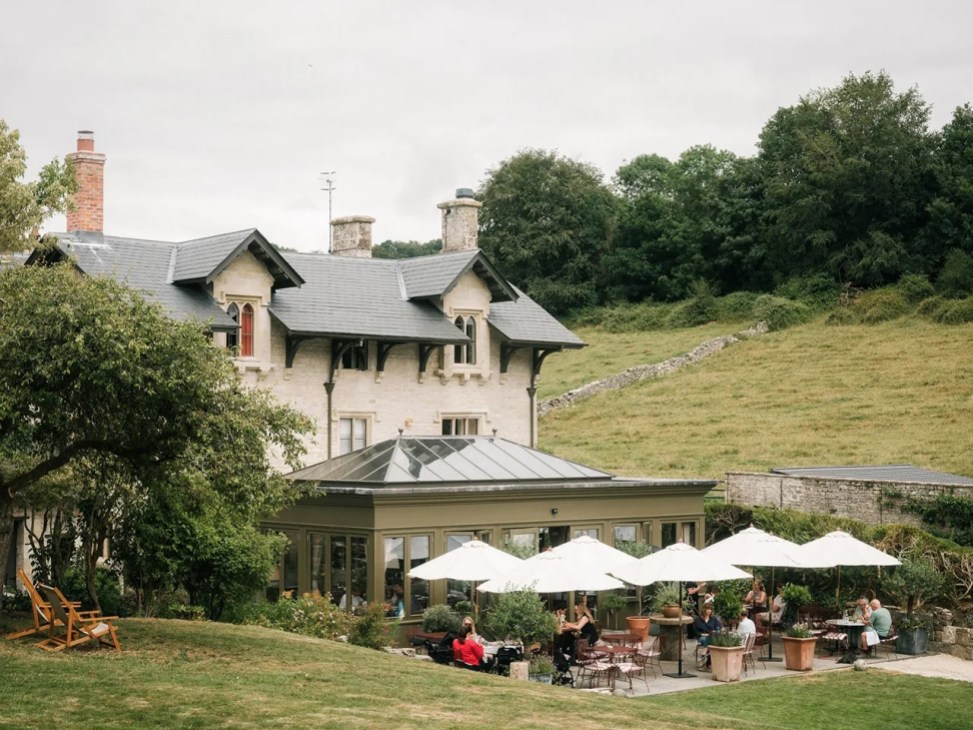
The second is Mandarin Oriental Punta Negra, on the headland where the Blanes family opened a modernist hotel in 1966. A reported €200m project by Blasson Property, with architecture restored and extended by Estudio Lamela and interiors by Laura Gonzalez with BG Studio, it now runs to 131 rooms and six restaurants. The art was curated by Paloma Fernández-Iriondo, formerly of Sotheby's, who commissioned artists based or born in Spain and whose work reflects Mallorca's history as a crossroads. Even the practical decisions are precise: 80 per cent of the rooms interconnect, for guests travelling with family and staff, and the spa and pool are open to non-residents.
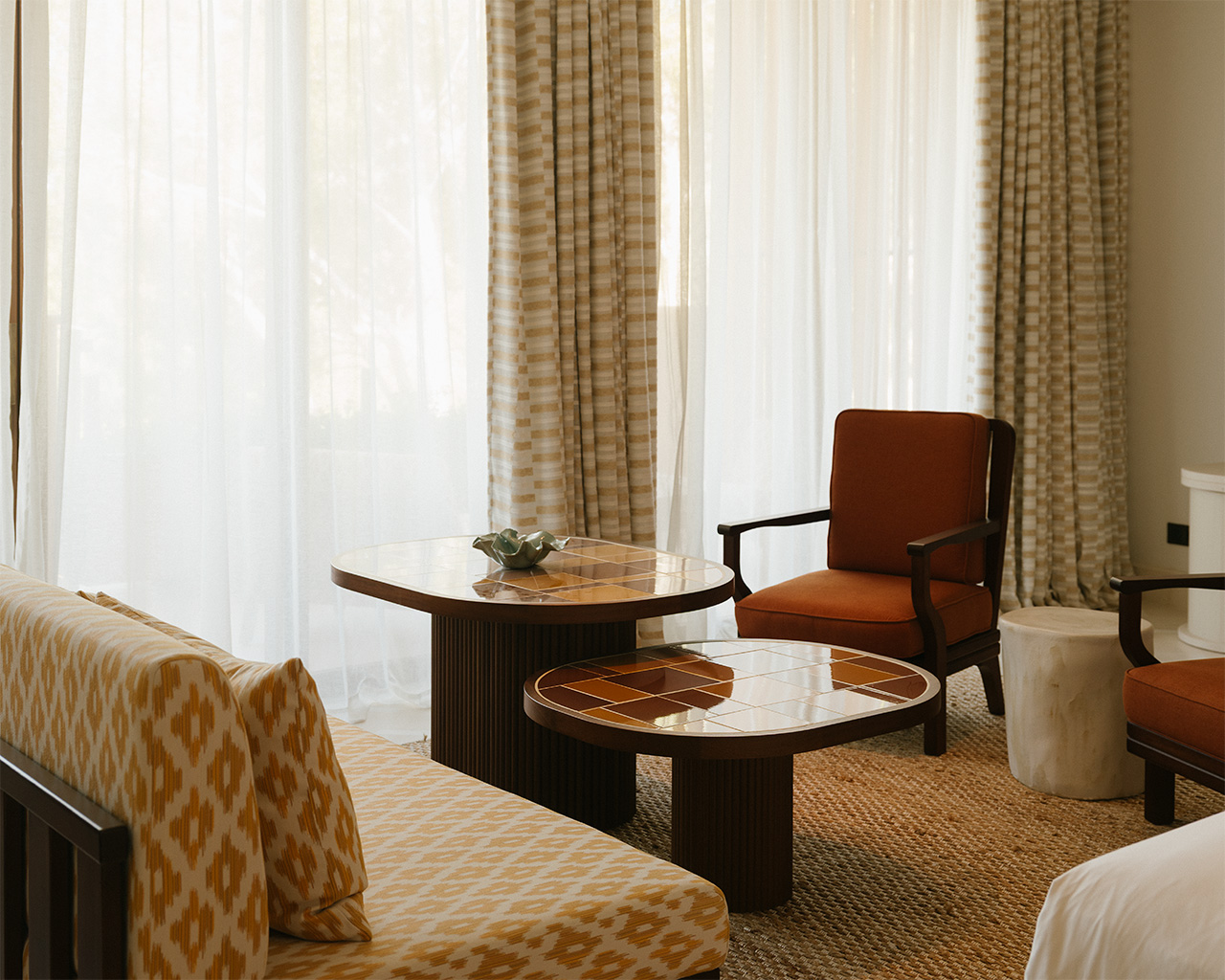
One property is a 41-room neighbourhood hotel, the other a resort with six restaurants. Their budgets have nothing in common. Their logic does: every element in the room is commissioned, sourced or made by someone the hotel can name.
Great room, weak bottle
This is where the chain usually breaks. The terrazzo is made from the building next door, the lamps are drawn by a designer down the road, the honey has a wooden drizzler — and then the bathroom is finished with an anonymous bottle from a catalogue that goes out to a thousand other properties. The amenity is often the last line of a procurement sheet rather than part of the design conversation, decided long after the lighting and the linen.
Guests do not experience a room in departments. They set down a bag, wash their hands, and read the label while they do it. If the object in their hand says nothing about where they are, the room quietly contradicts itself — and a plate flipper will notice.
Place as product
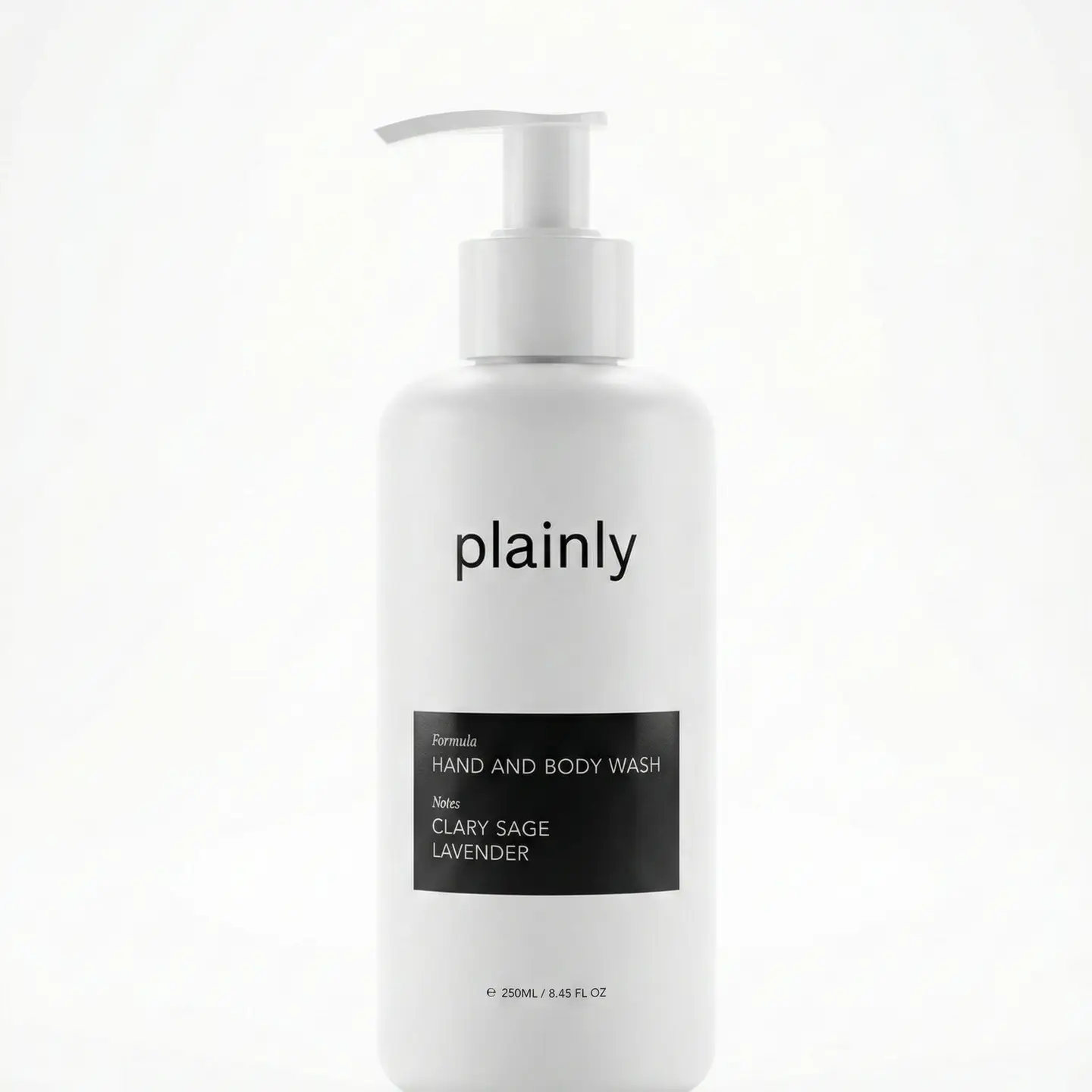
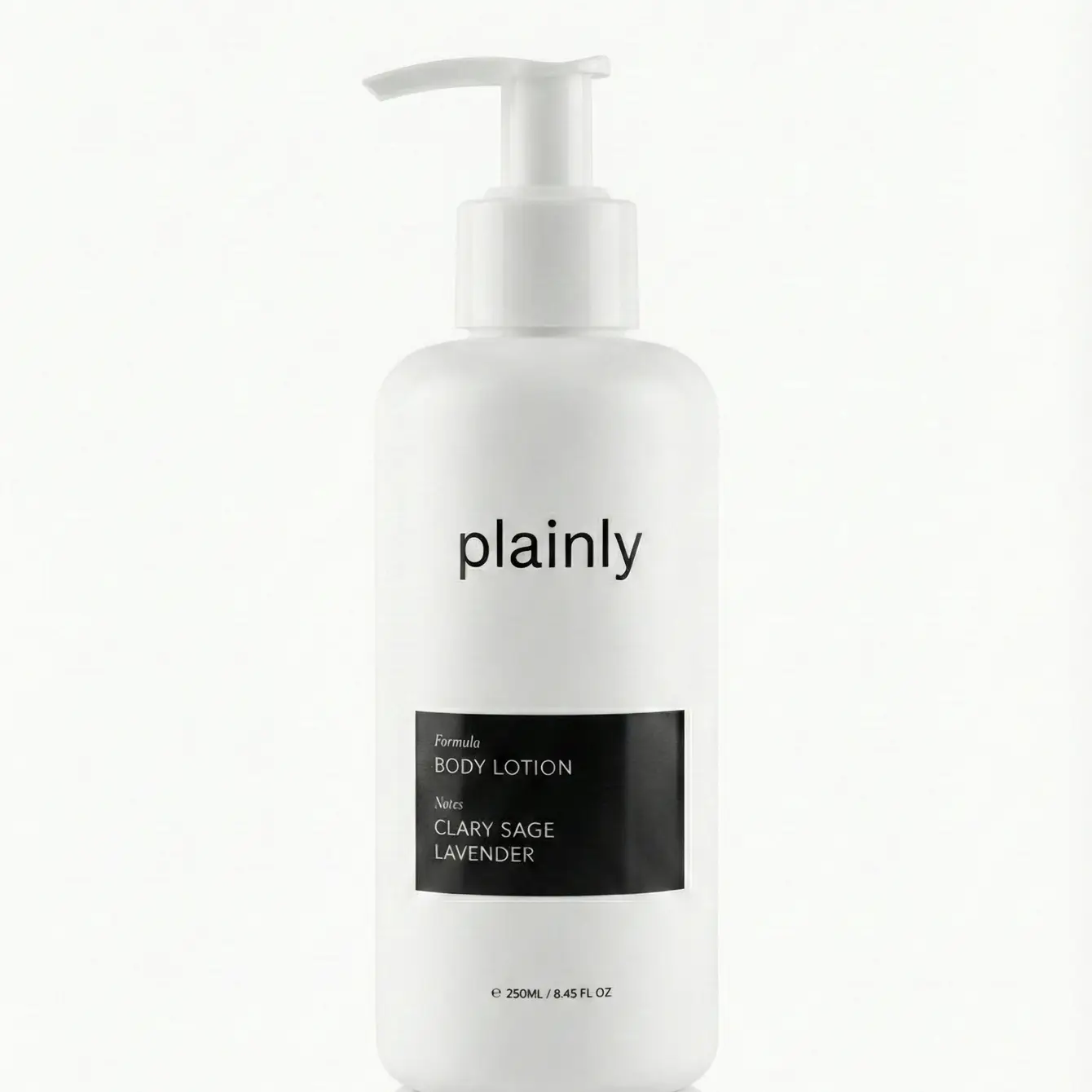
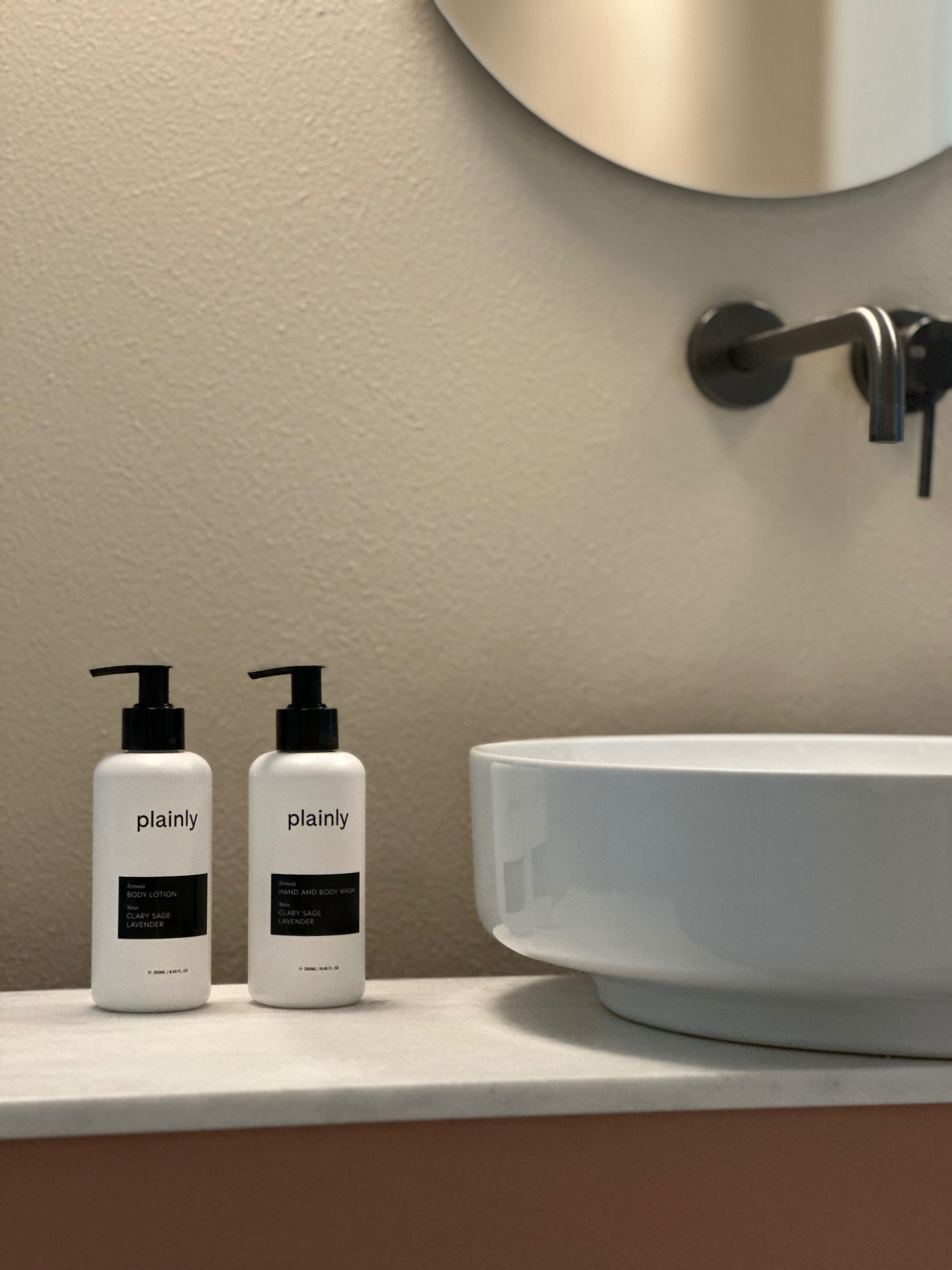
Our answer is a line of four: hand & body wash, body lotion, shampoo and conditioner. The shampoo is dedicated, because hair and skin need different treatments and shouldn't share a bottle of "hair and body wash". All four carry the same standards: carefully selected ingredients, natural scents, award-winning design, made in Germany, with refill options for the property.
The design comes from Winkreative, so the bottle can sit in a considered room without asking for attention. The system is built for back of house as much as front: refillable bottles served by 5-litre canisters, which keeps the bathroom clean and housekeeping simple. And where a property is as specific as Terreno is to its neighbourhood, an off-the-shelf line may not be the right answer at all — a scent developed for the house is.
A working example
At Cortiina Hotel in Munich, the amenities are a private scent developed for the property, in refillable bottles. The guest does not need the story to feel the effect. They only need to wash their hands and notice that the object agrees with the stone, the light and the calm around it.
Tuck ends his Punta Negra piece with a line worth keeping: "Perhaps that's what modern luxury is about — an elevated sense of place." We would add one clause. It starts at the sink, because that is where the guest is holding the evidence.
Sources: "Terreno Barrio Hotel, Palma" (Monocle, 13 May 2026) and "Mandarin Oriental Punta Negra, Mallorca" (Monocle, 30 July 2026). Photography courtesy of Monocle; all rights remain with Monocle.